We use cookies to enhance your browsing experience and analyze site traffic.
Analytics and tracking scripts will only load after you provide consent.
View our Privacy Policy.
TriEnda designs and manufactures automotive material handling and returnable packaging solutions for OEMs and Tier 1 suppliers. Our systems protect high-value components, improve line-side efficiency, support automation, and reduce waste across automotive supply chains.
Manufacturers rely on TriEnda to deliver durable reusable packaging systems that perform through repeated shipping, handling, and storage cycles.
TriEnda engineers returnable automotive packaging that performs in demanding production environments. Our team develops solutions that improve material flow, protect components, and simplify logistics across manufacturing operations.
We manufacture packaging systems using:
Twin-sheet thermoforming
Single-sheet thermoforming
Injection molding
Precision metal fabrication
These capabilities allow us to produce automotive pallets, wheel packs, EV battery packaging, custom dunnage, reusable containers, and steel racks that deliver consistent performance across automotive supply chains.
02 /
Automotive Products
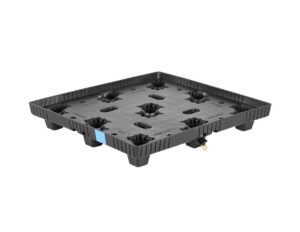
AUTOMOTIVE PALLETS
Strong HDPE twin sheet construction assures durability
TriEnda provides complete automotive packaging solutions that support high-volume manufacturing and logistics operations.
Our capabilities include:
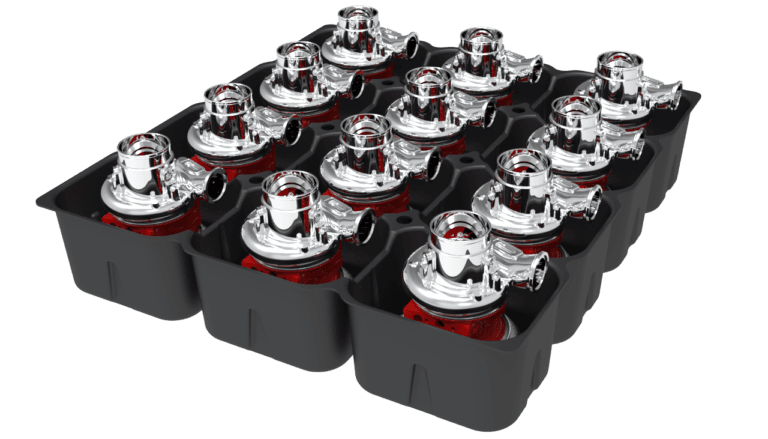
Returnable automotive containers and custom dunnage
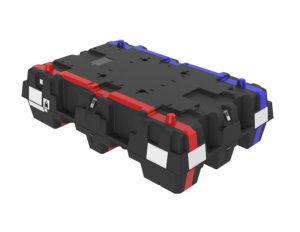
EV battery packaging systems for module and pack transport
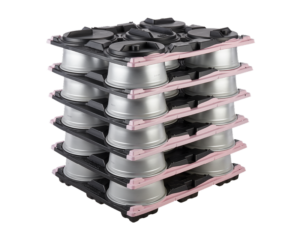
AIAG-aligned wheel packaging solutions
Injection molded and thermoformed plastic pallets
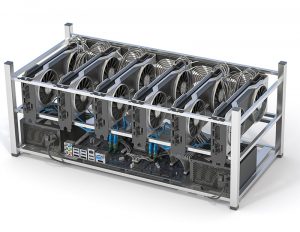
Custom metal racks for engines, transmissions, and heavy components
Twin-sheet thermoformed structural containers
Lightweight thermoformed trays and covers
Automation-compatible packaging for conveyors and robotic handling
These systems protect components, improve handling efficiency, and reduce expendable packaging waste
04 /
Advantages
CONSISTENT COMMUNICATION
From our personable sales team to a dedicated customer service team, you’ll never wonder about the status of your project. Our consistent communication starts from our very first meeting and facility tour to the day your order is completed.
DRIVE COST EFFICIENCY
As an industry player for over 40 years, we live and breathe by the latest market pricing. We consistently work to streamline our processes to ensure we provide the highest quality solutions at the lowest possible price.
INNOVATIVE DESIGNS
You won’t get the same designs you’ve seen from other firms. With one of the largest engineering staffs in the country, we have the benefit of a collaborative team of experts to help us deliver outstandingly innovative solutions.
FULL-SERVICE CAPABILITIES
We are a one-stop-shop offering sales, engineering, and manufacturing all under the same umbrella. With just one phone call, you’ll have instant access to industry leaders and professionals here to upgrade your experience.
05 /
TESTING STANDARDS
ISO 9001:2015 CERTIFIED COMPANY
TriEnda operates under ISO 9001:2015 quality standards to ensure consistent production processes and reliable packaging performance.
AIAG TESTING STANDARDS
TriEnda manufactures automotive packaging to meet applicable AIAG testing and performance standards, ensuring our containers, pallets, and transport systems perform reliably in real-world automotive logistics environments. Our packaging is engineered and validated for durability, repeat handling, stacking strength, and transport performance to align with the expectations of OEM and Tier 1 supply chains. This standards-driven approach supports consistent quality, predictable lifecycle performance, and long-term reliability in closed-loop automotive programs.
AUTOMOTIVE FAQ's
Automotive material handling solutions include reusable packaging, pallets, racks, containers, and custom dunnage that transport and store automotive components across manufacturing plants and supplier networks. These systems protect parts, improve line-side organization, and support efficient logistics throughout automotive supply chains.
Automotive manufacturers use returnable packaging to reduce expendable waste, improve part protection, and lower long-term packaging costs. Reusable containers, pallets, and racks support closed-loop logistics programs and help maintain consistent handling across production and distribution operations.
Manufacturers use custom automotive dunnage to protect sensitive or high-value components during shipping and storage. Common applications include wheels, EV battery modules, stamped metal parts, powertrain components, electronic assemblies, and interior or exterior trim parts.
Yes. Engineers design automotive packaging systems to work with conveyors, robotic handling equipment, and automated storage systems. Automation-compatible packaging improves repeatable handling, reduces manual labor, and supports efficient line-side delivery.
EV battery packaging requires additional structural protection and containment to stabilize sensitive components during transport. Battery packaging systems protect modules and packs from impact, vibration, and movement while maintaining safe handling throughout the supply chain.
Automotive packaging can be manufactured using several processes depending on the application. Common manufacturing methods include twin-sheet thermoforming, single-sheet thermoforming, injection molding, and metal fabrication. These processes allow manufacturers to produce lightweight trays, structural containers, durable pallets, and custom racks.
Reusable packaging systems improve supply chains by reducing expendable packaging waste, improving trailer utilization, and providing consistent part protection. Durable containers and pallets also improve material flow and reduce packaging replacement frequency.
Automotive material handling systems support OEM manufacturers, Tier 1 suppliers, EV manufacturers, heavy truck producers, and component suppliers. These industries rely on durable reusable packaging to transport parts safely across manufacturing and logistics operations.
Manufacturers commonly use durable plastics such as HDPE, ABS, and TPO along with steel rack systems. Engineers select materials based on load requirements, durability needs, temperature exposure, and expected lifecycle performance.