
Reusable Battery Packs for Safe Transport
Standard and EV Battery Packaging Solutions
TriEnda designs and manufactures advanced EV battery packaging solutions for electric vehicles, engineered to safely transport lithium-ion cells, modules, and full battery assemblies. Built with twin-sheet HDPE construction, our battery packs deliver total enclosed protection, impact resistance, and regulatory compliance, while reducing weight and cost compared to traditional steel containers.
From UN-certifiable lithium-ion packaging to custom solutions for remanufactured and standard batteries, TriEnda helps OEMs and suppliers improve safety, optimize return ratios, and streamline EV supply chains.
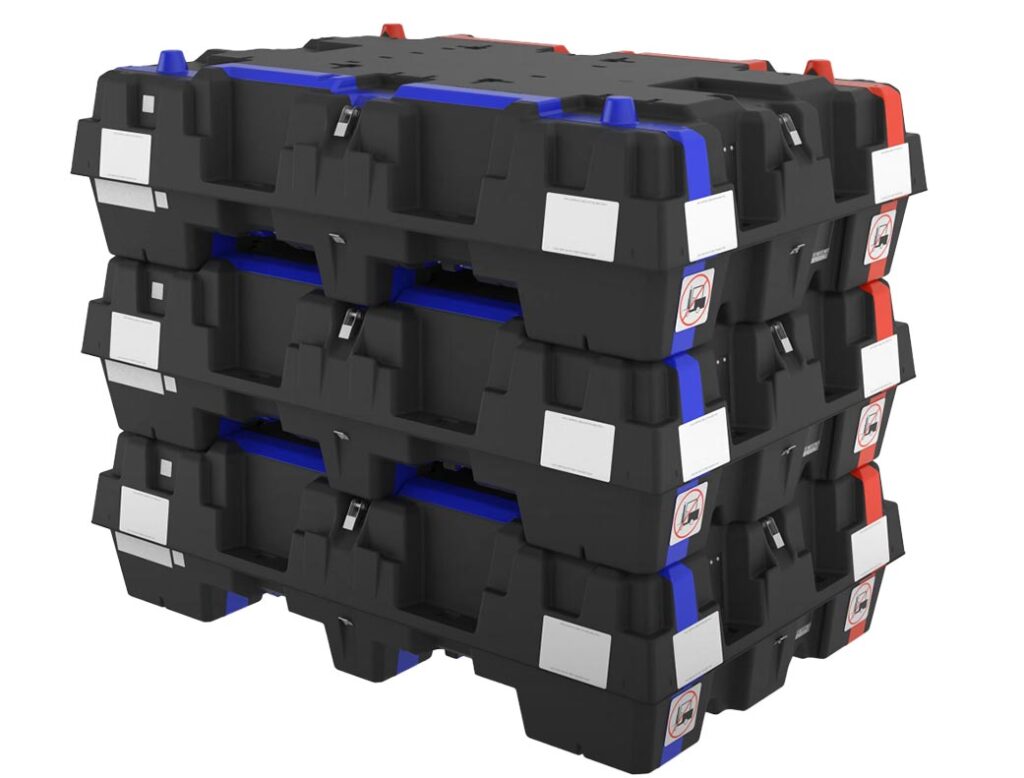
COMPLETE BATTERY ASSEMBLY PACKS
For All Vehicles
Total enclosed protection keeps full battery assemblies safe during transport
Nestable design reduces return freight costs and storage space
Lightweight HDPE construction delivers durability with lower weight than steel
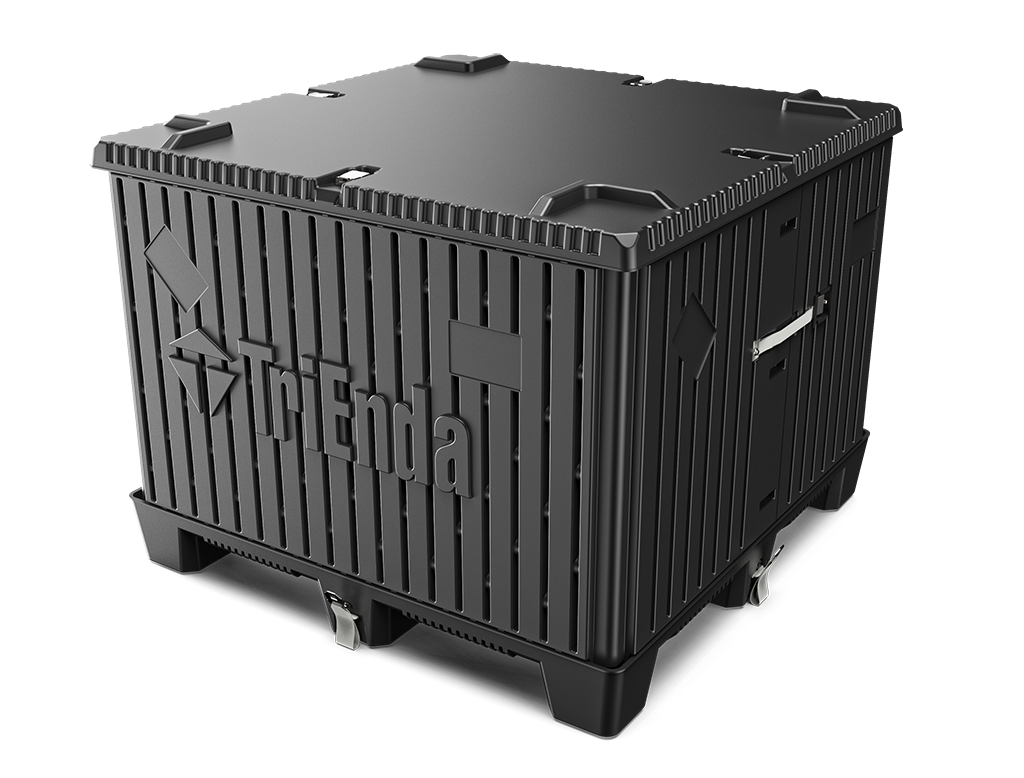
BATTERY MODULE PACKS
For EV/Hybrid Vehicles
Precision-fit protection secures battery modules and reduces damage risk
UN-ready designs support compliance with lithium-ion transport requirements
Stackable, nestable builds improve handling efficiency and reduce logistics costs
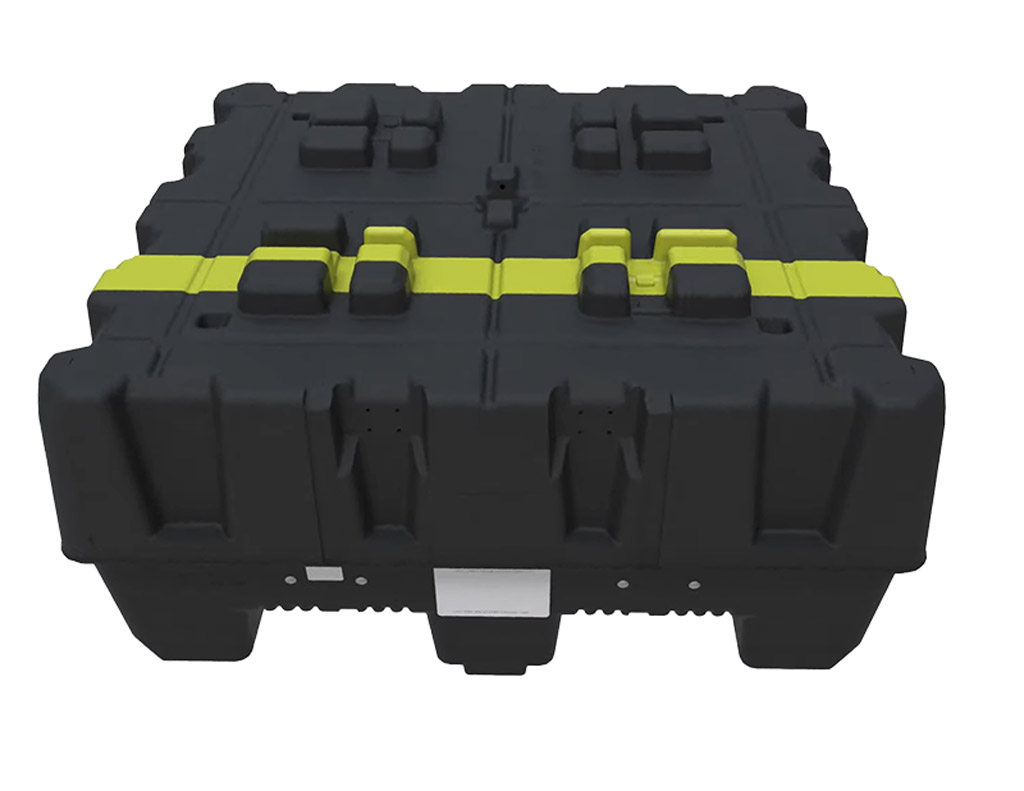
LITHIUM ION CELL PACKS
For EV/Hybrid Vehicles
UN-certified designs ensure safe transport of lithium-ion batteries
Enclosed, impact-resistant construction protects hazardous components
Reusable, nestable packaging reduces cost and improves return logistics
01 /
Battery Pack Types

EASY CLEAN

RECYCLABLE CRADLE TO CRADLE

Sanitary

Weather resistant, withstands humidity

Impact resistant for long cycle life

4-Way Forklift & Forkjack Entry
02 /
Features & Benefits
Safer, Smarter Battery Transport for Supply Chains
Key PRODUCT Benefits
- Total enclosed protection for battery modules and assemblies
- UN-tested and UN-certifiable EV battery packaging options
- Designed to support DOT 173.185 and hazardous goods transport requirements (program-specific)
- Lower weight and total cost compared to traditional steel containers
- Nestable battery pack designs improve return ratios and reduce storage space
- Engineered for impact resistance and demanding automotive handling environments
- Custom internal dunnage and retention systems to stabilize battery components
- Built for returnable, reusable packaging programs with wash-down friendly materials
- Twin-sheet HDPE construction for long cycle life and consistent performance
Supply CHAIN Benefits
From battery module transport to full assembly movement, TriEnda packaging is built to perform in high-demand automotive environments. With impact-resistant materials, customizable dunnage, and reusable system design, our battery packs support safer handling, better space utilization, and lower total cost across your supply chain.
Reduce packaging and freight costs with lightweight design
Improve warehouse space utilization with nesting
Minimize product damage during transport
Support regulatory compliance for hazardous materials
Extend packaging life cycle vs. disposable options
Built for the EV & Automotive Ecosystem
Electric Vehicles (EV & Hybrid)
Lithium-ion cells, modules, and full battery assemblies
Automotive OEM & Tier 1
Line-side delivery, WIP transport, returnable packaging
Remanufacturing & Service
Battery repair, replacement, and redistribution
Industrial & Heavy Equipment
Battery transport across multiple applications
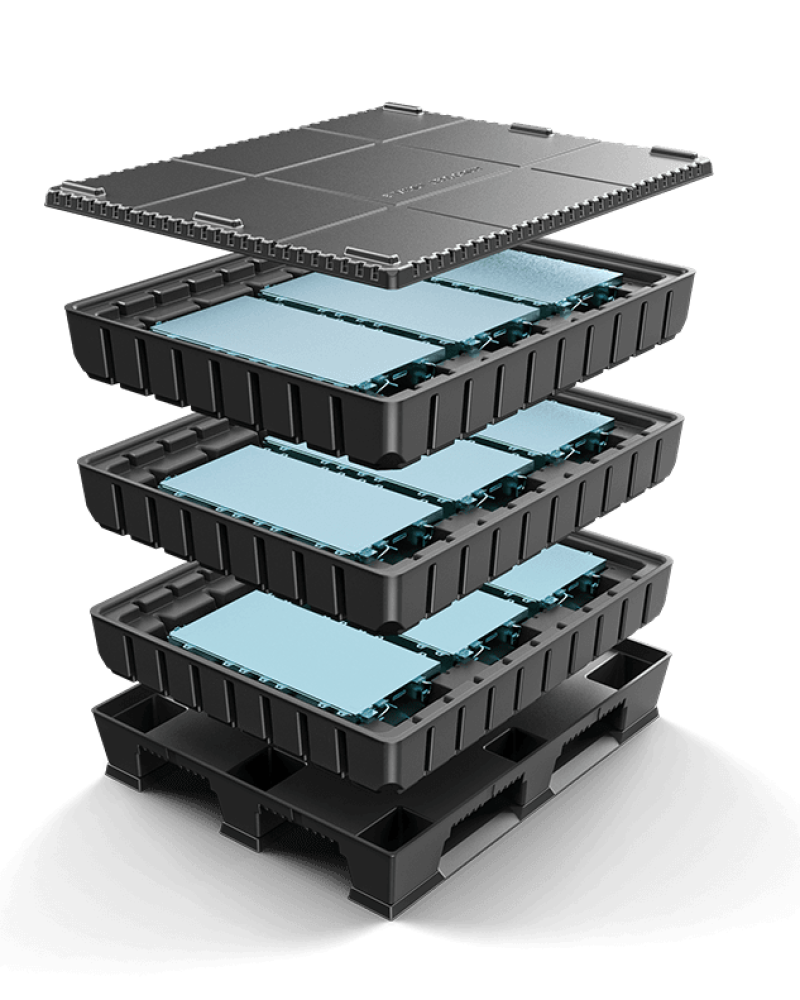
02 /
Applications & Industries
FAQ: Why Use TriEnda EV Battery Packaging?
What is EV battery packaging?
EV battery packaging refers to specialized containers designed to safely transport lithium-ion cells, modules, and full battery assemblies. These solutions are engineered to provide protection, containment, and compliance for high-value and hazardous components throughout the supply chain.
What types of batteries can TriEnda package?
TriEnda battery packs are designed to handle:
Lithium-ion cells
Battery modules
Full EV battery assemblies
Remanufactured battery components
Standard automotive batteries
Are TriEnda battery packs UN-certified?
TriEnda offers UN-tested and UN-certifiable battery packaging designs. Certification depends on the specific program, battery type, and testing requirements.
Can TriEnda packaging meet DOT 173.185 requirements?
Yes. TriEnda battery packaging can be engineered to support DOT 173.185 regulations, which govern the safe transport of lithium batteries. Final compliance depends on testing and program-specific design.
Why use plastic battery packaging instead of steel containers?
Plastic battery packs offer several advantages over steel:
Lower weight, reducing freight costs
Improved ergonomics and handling
Corrosion and weather resistance
Often lower total cost of ownership
Comparable protection with enclosed designs
What is twin-sheet HDPE and why is it used?
Twin-sheet HDPE is a durable plastic manufacturing process that creates strong, hollow structures. It provides:
High impact resistance
Long cycle life
Consistent performance in demanding environments
Ideal structure for reusable packaging systems
How do nestable battery packs improve efficiency?
Nestable designs allow empty containers to stack inside each other, reducing:
Return freight costs
Warehouse storage space
Handling inefficiencies
This is especially valuable in closed-loop automotive and EV supply chains.
Can battery packaging be customized for specific applications?
Yes. TriEnda designs custom battery packaging solutions with:
Engineered dunnage and internal compartments
Size and weight optimization
Handling compatibility (forklift, automation, etc.)
Application-specific protection features
How does TriEnda packaging improve safety?
TriEnda battery packs are engineered with:
Total enclosed protection
Impact-resistant materials
Secure internal retention systems
Designs that support hazardous material transport requirements
Is TriEnda battery packaging reusable?
Yes. TriEnda solutions are designed for returnable, reusable programs, helping reduce waste, improve sustainability, and lower long-term packaging costs.
What industries use EV battery packaging?
TriEnda battery packaging is used across:
Electric vehicle (EV) manufacturing
Automotive OEM and Tier 1 suppliers
Battery manufacturing and remanufacturing
Industrial equipment and energy storage sectors
How do I get started with a custom battery packaging solution?
You can start by providing details such as:
Battery type and dimensions
Weight and handling requirements
Shipping and regulatory needs
From there, TriEnda’s team will design a solution tailored to your application